Translate to your Mother Tongue and Enjoy my Articles

Showing posts with label AI. Show all posts

Saturday, July 22, 2023

Seven Leading AI Companies in the US Pledge Voluntary Safeguards Amidst Growing Concerns of AI Risks

 The White House recently announced that seven leading AI companies in the United States have voluntarily agreed to safeguards on the development of artificial intelligence. 

The companies involved are Amazon, Anthropic, Google, Inflection, Meta (parent company of Facebook), Microsoft, and OpenAI. These companies will commit to new standards in safety, security, and trust in AI technologies. 

The announcement comes amid increasing competition between these companies to create advanced AI systems with various applications. However, concerns have arisen over the potential risks of unchecked AI development, such as the spread of disinformation and the emergence of self-aware, uncontrollable AI systems. 

        In response, these voluntary safeguards represent an initial step towards addressing AI risks, while policymakers work to establish comprehensive legal and regulatory frameworks for AI development.


A.I. Companies' Commitment to Voluntary Safeguards


The seven leading AI companies formally announced their commitment to new standards during a meeting with President Joe Biden at the White House. In his remarks, President Biden emphasized the need to be vigilant about potential threats that may arise from emerging technologies while acknowledging the vast potential upside of AI. These companies are currently racing to outdo each other by developing AI systems capable of generating text, photos, music, and video without human input. However, these technological leaps have sparked fears of disinformation and warnings of the risks posed by self-aware computers.


Early and Tentative Steps in AI Regulation


The voluntary safeguards represent an early and tentative step in AI regulation as governments worldwide grapple with the rapid evolution of this technology. While these agreements include testing products for security risks and using watermarks to identify AI-generated content, they are voluntary and not enforceable by government regulators. Nevertheless, the Biden administration and lawmakers feel an urgency to address the potential risks posed by AI, considering their past struggles to regulate social media and other technologies.


Addressing Challenges of AI Technology


The White House has not yet disclosed details of a forthcoming presidential executive order focused on controlling the acquisition of new AI programs and components by countries like China. This broader issue involves imposing restrictions on advanced semiconductors and exporting large language models used in AI development. Such regulations aim to prevent other countries from obtaining these technologies easily.


Scope of Voluntary Commitments


The voluntary commitments made by the seven AI companies encompass several key areas, including security testing of AI products by independent experts and sharing information with relevant authorities to manage technology risks effectively. Furthermore, companies commit to implementing measures to help consumers identify AI-generated content, such as using watermarks. Additionally, these companies pledge to provide regular public reports on their AI systems' capabilities, limitations, security risks, and evidence of bias. They also promise to deploy advanced AI tools to tackle significant societal challenges like cancer treatment and climate change. Moreover, research on the risks of bias, discrimination, and invasion of privacy from AI technology's spread is part of their commitment.


Industry Response to Voluntary Safeguards


While some view these voluntary commitments as a proactive move by the companies to self-regulate and influence future legislation, critics argue that the agreed-upon standards are relatively vague and can be interpreted differently by each company. For instance, the commitment to strict cybersecurity around data and code used to create language models lacks specific details and could be seen as protecting intellectual property more than addressing potential risks. Thus, the voluntary agreements may not be sufficient to prevent further efforts to pass legislation and impose regulations on AI technology.


Conclusion


The voluntary safeguards agreed upon by leading AI companies represent an initial step towards addressing the risks associated with AI development. While they are not legally enforceable, they demonstrate the companies' willingness to take responsibility for the potential dangers posed by their technologies. Policymakers must now work to craft legislation and regulatory frameworks that mandate transparency, privacy protections, and enhanced research on AI risks. In doing so, they can strike a balance between fostering responsible AI innovation and safeguarding the rights and safety of the public. As the AI landscape continues to evolve rapidly, a comprehensive regulatory approach will be crucial to managing the impact of AI on society and ensuring the responsible development of this transformative technology.

Tuesday, June 13, 2023

Harnessing AI in Breast Cancer Detection: Revolutionizing Mammogram Reviews for Early Diagnosis


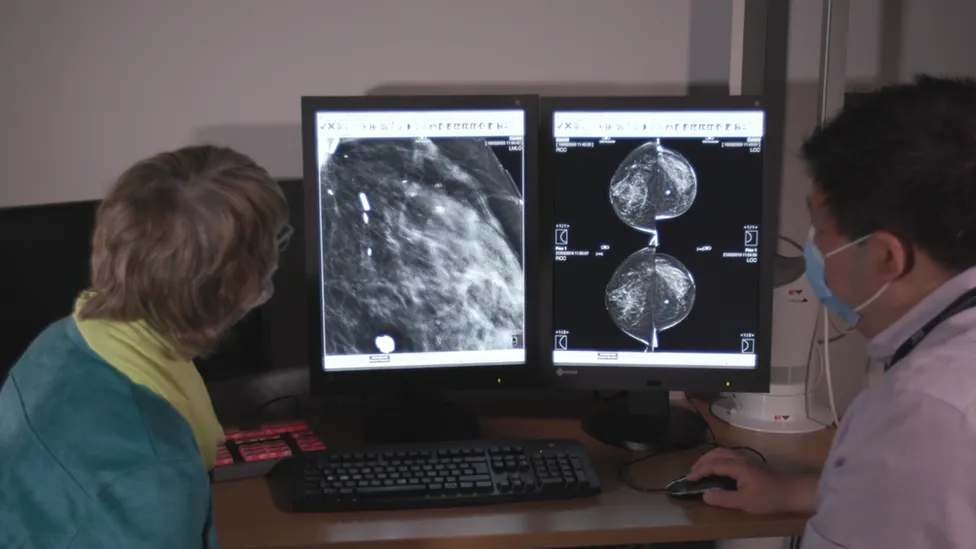
A groundbreaking trial underway at Aberdeen Royal Infirmary in Scotland is exploring the potential of artificial intelligence (AI) to revolutionize breast cancer detection.

By assisting radiologists in reviewing mammograms, AI technology has the ability to enhance accuracy, efficiency, and patient outcomes. This article delves into the significance of AI in healthcare, the ongoing AI trial in Aberdeen, and the promising impact it holds for breast cancer screenings.

Unleashing the Potential of AI in Healthcare:

Artificial intelligence, the domain where computers perform tasks that usually require human intelligence, has already made significant strides across various industries. In healthcare, AI has proven to be a powerful tool, aiding in drug discovery, disease diagnosis, and treatment planning. Rather than replacing medical practitioners, AI is seen as a valuable resource that complements their expertise, expedites processes, and improves patient care.

The Aberdeen AI Trial: Pioneering Innovation:

Aberdeen Royal Infirmary, in collaboration with the University of Aberdeen and industry partners, is leading the Gemini project—an AI trial that focuses on breast cancer detection. The trial employs an AI model named Mia, developed by Kheiron Medical Technologies, with cloud computing services provided by Microsoft. Although automatic AI deployment is currently restricted by the National Screening Council, the trial is exploring the integration of AI as an additional check during mammogram reviews.

Addressing the Challenges in Breast Cancer Detection:

Public Health Scotland data reveals an increasing number of screen-detected breast cancers, necessitating the expertise of radiologists. However, the declining availability of radiologists poses a challenge to effectively review the growing number of mammograms. Currently, radiologists analyze approximately 5,000 mammograms per year, resulting in 250 to 300 patients being recalled for further examination. The implementation of AI aims to mitigate the risk of missed diagnoses and optimize the detection process.

How AI Augments the Detection Process:

Dr. Gerald Lip, the clinical director of the North East Scotland Breast Screening Programme, demonstrates the functionality of the AI software. By comparing mammogram results, radiologists can identify differences highlighted by the AI. The software effectively pinpoints areas of concern, enabling early detection of breast cancer. Identifying abnormalities at an early stage significantly improves the chances of successful treatment and recovery.

Enhancing Patient Experience and Empowerment:

Participants, such as June, have reported positive experiences with AI-assisted screenings. June expressed that the AI system made the process feel less intrusive and provided reassurance. With AI, patients can have increased confidence in the analysis, as the system removes the anxiety associated with human scrutiny. Early detection facilitated by AI empowers patients to take proactive measures, leading to more effective treatment and improved outcomes.

Mitigating Staff Shortages with AI:

Scotland, like many regions, is grappling with a shortage of radiology staff due to retirements and limited availability of skilled professionals. A comprehensive review of Scotland's breast screening program suggests that AI could alleviate this burden. Replacing one human reader with AI has the potential to cover half of the image reading load, which amounts to approximately 1.72 million images reviewed annually. The goal, however, is not to replace radiologists but to explore how AI can augment their work, improve efficiency, and enhance cancer detection as a safety net.

Widening AI Adoption for Breast Cancer Detection:

Kheiron Medical Technologies aims to expand the accessibility of their AI model, Mia, to more than 30 NHS trusts across the UK. Additionally, healthcare institutions in England are already exploring the integration of AI to improve outcomes for breast cancer patients. This indicates a growing acceptance of AI technology and its potential to become an essential component of breast cancer screening programs, ultimately saving lives.

Conclusion:

The ongoing AI trial at Aberdeen Royal Infirmary demonstrates the transformative potential of artificial intelligence in breast cancer detection. By assisting radiologists in reviewing mammograms, AI technology offers improved accuracy, efficiency, and patient outcomes. As AI continues to gain acceptance and adoption, it has the power to revolutionize breast cancer screenings, mitigating staff shortages, and providing a valuable tool for medical professionals in the fight against breast cancer. Harnessing the power of AI can bring us closer to a future where early-stage breast cancer detection is more effective, ultimately saving more lives.

Exploring the Power of AI in Healthcare: A BBC Program

Monday, May 22, 2023

The Highest-Paying Niche Tech Careers: Unlocking Opportunities in Cybersecurity, Data Science, AI, and More

The Future of Tech Careers: Niche Tech Career Paths to Consider

The tech industry is constantly evolving, and with it, the types of jobs that are available. In the past, tech careers were largely focused on software development and engineering. However, as technology has become more pervasive in our lives, new and emerging tech career paths have emerged.

If you're interested in a career in tech, but you're not sure where to start, here are a few niche tech career paths to consider:

Cybersecurity

Cybersecurity is the practice of protecting systems, networks, and data from unauthorized access, use, disclosure, disruption, modification, or destruction. Cybersecurity professionals use a variety of tools and techniques to protect information systems from cyberattacks.

Skills Needed:

Strong technical skills, including programming, networking, and security analysis
The ability to think critically and solve problems
Excellent communication and interpersonal skills.

Resources:

The National Institute of Standards and Technology (NIST)
Cybersecurity Framework
The SANS Institute
The International Information Systems Security Certification Consortium (ISC)

Data Science

Data science is the process of extracting knowledge from data. Data scientists use a variety of tools and techniques to analyze data, identify patterns, and make predictions.

Skills Needed:

Strong analytical skills
Programming skills
The ability to think creatively and solve problems
Excellent communication and interpersonal skills.

Resources:

The Data Science Association
The University of California, Berkeley Extension Data Science Bootcamp
The Coursera Data Science Specialization

Artificial Intelligence

Artificial intelligence (AI) is the ability of a computer or machine to learn and perform tasks that are typically associated with human intelligence, such as reasoning, learning, and problem solving. AI is used in a variety of industries, including healthcare, finance, and manufacturing.

Skills Needed:

Strong programming skills
A deep understanding of mathematics and statistics
The ability to think logically and solve problems
Excellent communication and interpersonal skills

Resources:

The Association for the Advancement of Artificial Intelligence (AAAI)
The Stanford University Artificial Intelligence Course
The MIT Introduction to Artificial Intelligence Course

Cloud Computing

Cloud computing is the delivery of computing services—including servers, storage, databases, networking, software, analytics, and intelligence—over the Internet (“the cloud”). Companies use cloud computing to cut IT costs, speed up innovation, and improve agility.

Skills Needed:

Strong programming skills
Knowledge of cloud computing platforms, such as Amazon Web Services (AWS),
Microsoft Azure, and Google Cloud Platform (GCP)
The ability to think strategically and solve problems
Excellent communication and interpersonal skills

Resources:

The Cloud Computing Association
The AWS Certified Solutions Architect – Associate Exam
The Microsoft Azure Fundamentals Exam

Blockchain

Blockchain is a distributed ledger technology that allows for secure, transparent, and tamper-proof transactions. Blockchain is used in a variety of industries, including finance, healthcare, and supply chain management.

Skills Needed:

Strong programming skills
Knowledge of blockchain platforms, such as Ethereum and Bitcoin
The ability to think creatively and solve problems
Excellent communication and interpersonal skills

Resources:

The Blockchain Alliance
The Ethereum Foundation
The Bitcoin Foundation


UX/UI Design

UX/UI design is the process of designing user interfaces and user experiences. UX designers focus on the overall experience of a user, while UI designers focus on the visual elements of a user interface.

Skills Needed:

Strong visual design skills
The ability to think creatively and solve problems
Excellent communication and interpersonal skills

Resources:

The Nielsen Norman Group
The Interaction Design Association
The AIGA

Digital Marketing

Digital marketing is the use of digital channels, such as websites, social media, and email, to reach and engage with customers. Digital marketers use a variety of tools and techniques to create and execute marketing campaigns.

Skills Needed:

Strong analytical skills
The ability to think creatively and solve problems
Excellent communication and interpersonal skills

Resources:

The American Marketing Association
The Digital Marketing Institute
The HubSpot Academy

These are just a few of the many niche tech career paths that are available. With the ever-changing landscape of technology, there are always new and emerging opportunities for those who are skilled and passionate about technology.

How to Get Started in a Niche Tech Career

If you're interested in a niche tech career, there are a few things you can do to get started:

Do your research. Learn as much as you can about the career path you're interested in. This includes reading articles, books, and blogs, as well as talking to people who are already working in the field.

Develop the necessary skills. Many niche tech careers require specific skills, such as programming, data analysis, or design. Take courses, attend workshops, or do self-study to develop the skills you need.

Get experience. Internships, volunteer work, and personal projects are all great ways to gain experience in a niche tech field.

Network. Get to know people who work in the field you're interested in. Attend industry events, join online forums, and connect with people on LinkedIn. By following these steps, you can increase your chances of landing a job in a niche tech career.

The Benefits of a Niche Tech Career

There are many benefits to pursuing a niche tech career. Niche tech careers are often in high demand, which means that there are plenty of job opportunities available. Niche tech careers also tend to pay well, and they offer the opportunity to work on cutting-edge technology. Additionally, niche tech careers can be very rewarding, as they allow you to use your skills and creativity to solve problems and make a difference in the world.

If you're looking for a challenging and rewarding career in tech, a niche tech career may be the perfect fit for you.

Tuesday, May 16, 2023

ChatGPT Revolutionizes AI Conversations: Browse the Web and Customize with Plugins

ChatGPT Introduces Web-Browsing Powers with New Plugins

OpenAI has made waves in the tech world with its groundbreaking AI language model, ChatGPT. After securing a $10 billion deal with Microsoft and gaining immense popularity as one of the most visited websites, OpenAI is taking ChatGPT to new heights. By the end of 2023, OpenAI plans to release a highly anticipated feature: web-browsing capabilities through ChatGPT plugins. These plugins will enable ChatGPT to access external databases and online knowledge sources, providing users with real-time information. Let's explore the details of this exciting development.

Enhanced Functionality with ChatGPT Plugins:

OpenAI is introducing ChatGPT plugins, allowing the AI language model to harness the power of the internet. Although not built-in, these plugins will enable ChatGPT to access third-party databases and other online knowledge sources. Initially, these plugins will be available in Alpha for a limited set of developers and premium subscribers. OpenAI plans to gradually expand access to the plugins alongside API availability. Furthermore, OpenAI has also revealed its plans to allow developers to create and release their own plugins for ChatGPT, ushering in a new era of customization and innovation.

Empowering ChatGPT Users:

ChatGPT Plus subscribers will have the privilege of early access to these experimental features. OpenAI will provide a beta panel in the user settings, granting Plus users the opportunity to try out the new web-browsing and plugin functionalities. With the web-browsing feature, ChatGPT will be able to retrieve real-time information and answer questions about recent topics and events. The plugin feature will enable users to enhance ChatGPT's capabilities by enabling third-party plugins based on their specific needs and interests.

Current Knowledge Limitation and Addressing Real-Time Information:

One of the limitations of ChatGPT is its knowledge cutoff, which currently extends until September 2021. When queried about current affairs, ChatGPT informs users that it lacks access to real-time information and suggests checking reliable news sources or conducting online searches. The addition of web-browsing capabilities aims to bridge this gap and equip ChatGPT with the ability to provide up-to-date information similar to Microsoft's Bing and Google's Bard.

The Competition: Google's Bard and Microsoft's Bing:

In the race to redefine online search, both Google's Bard and Microsoft's Bing have already introduced real-time web browsing capabilities. Bard and Bing have emerged as strong contenders in this space, challenging Google's long-standing dominance. While Bing can generate images based on text prompts, Bard stands out with its voice input capabilities and forthcoming image generation feature. With ChatGPT now entering the arena, the competition for dominance in online search is set to intensify further.

Implications and Future Prospects:

The introduction of web-browsing powers to ChatGPT opens up a world of possibilities. Users will benefit from the ability to obtain real-time information without having to leave the conversation. For instance, ChatGPT could pull recent news articles, provide the latest sports scores, or deliver information on trending topics. The availability of plugins will further empower users to tailor ChatGPT's functionality to their specific needs, enhancing its versatility.

Moreover, by allowing developers to create and release their own plugins, OpenAI is fostering an ecosystem of innovation and customization around ChatGPT. This move paves the way for the development of niche plugins, enabling ChatGPT to cater to a wide range of domains, industries, and specialized knowledge areas. With the combination of web-browsing capabilities and user-generated plugins, ChatGPT has the potential to become an invaluable tool for research, customer support, content generation, and more.

Conclusion:

OpenAI's announcement of ChatGPT's upcoming web-browsing feature through plugins marks a significant milestone in the evolution of AI language models. By granting ChatGPT the ability to browse the internet and access real-time information, OpenAI is positioning ChatGPT as a formidable competitor to Microsoft's Bing and Google's Bard. As ChatGPT expands its capabilities and empowers users and developers to create their own plugins, we can anticipate a future where AI-driven conversational agents become indispensable tools for knowledge retrieval, personal assistance, and problem-solving. The convergence of natural language processing and web browsing opens up endless possibilities, and ChatGPT is poised to play a pivotal role in shaping the future of human-AI interaction.

Sunday, May 14, 2023

AI in Energy Sector: Octopus Energy CEO Claims AI Doing the Work of 250 People with Better Customer Satisfaction

The Impact of AI on the Energy Industry: A Critical Analysis of Octopus Energy's Use of AI

Introduction

The energy industry is one of the many industries that have been exploring the use of artificial intelligence (AI) to increase productivity and improve customer satisfaction. UK-based energy supplier, Octopus Energy, has recently claimed that AI is doing the work of 250 people at their company. This article will critically analyze Octopus Energy's use of AI, discuss the potential benefits and drawbacks of AI adoption, and consider the broader impact of AI on the labor market.

Octopus Energy's Use of AI

According to CEO Greg Jackson's article in The Times of London, Octopus Energy has been experimenting with AI for several months. The company has incorporated AI into its systems, and employees have been letting it reply to some customer emails since February. Currently, AI is responding to over a third of customer emails, which is equivalent to the work of around 250 employees. Furthermore, Jackson claims that emails written by AI have delivered a higher level of customer satisfaction (80%) than skilled and trained personnel (65%).

Supervision and Review

It is essential to note that Octopus Energy's use of AI is supervised and reviewed by human employees. The team supervises the answers AI provides, drafting personalized responses that a team member can review before sending them on. This approach is vital as it ensures that the AI responses are accurate and appropriate and that customer interactions maintain a human touch.

Benefits of AI Adoption

AI can bring significant benefits to businesses, including increased productivity, improved accuracy, and enhanced customer satisfaction. The use of AI in customer service, for example, can help companies provide personalized and efficient responses to customer queries, improving the overall customer experience. AI can also process large volumes of data more quickly and accurately than humans, freeing up employees to focus on higher-value tasks and increasing productivity.

Drawbacks of AI Adoption

Despite the potential benefits of AI adoption, there are also concerns that AI tools may lead to job losses and widen the skills gap. While AI tools may be able to process large volumes of data and carry out repetitive tasks, it is unclear whether they can replace human intuition, creativity, and decision-making skills. Furthermore, while AI can deliver personalized responses and increase customer satisfaction, it is also essential to consider the importance of human-to-human interaction in customer service.

Potential Impact on the Labor Market

The rapid development of AI technology has the potential to cause significant disruption to the job market. A report from Goldman Sachs has warned that generative AI tools, such as OpenAI's ChatGPT, could cause "significant disruption" in the labor market, potentially affecting around 300 million full-time jobs globally. White-collar workers, particularly those in legal services and administration, are seen as some of the most likely to be affected by new AI tools.

Furthermore, while AI can increase productivity, there are concerns that it may also widen the skills gap and exacerbate income inequality. Workers without the necessary skills to work with AI tools may find themselves left behind in the job market, leading to a widening of the skills gap and exacerbating income inequality.

Conclusion

The use of AI tools can significantly improve productivity and customer satisfaction, as demonstrated by Octopus Energy's use of AI in customer service. However, there are concerns that the rapid development of AI technology could lead to job losses and wider skills gaps, particularly in white-collar jobs. It is crucial to consider the potential consequences of AI adoption and ensure that AI technology is developed and implemented in a responsible and ethical manner that balances productivity gains with the social and economic impact on the workforce. As such, AI tools should be viewed as complementary to human employees, rather than replacements for them. It is only through responsible and thoughtful implementation that we can ensure that the potential benefits of AI are.

Friday, May 12, 2023

Google I/O 2023: What's New in Hardware, Software, and AI


Google I/O 2023: A Look Back

Google I/O 2023 was a jam-packed event with announcements across a wide range of products and services. Here is a look back at some of the biggest news from the show:

Hardware

Google announced a number of new hardware products at I/O 2023, including:

The Pixel 7a: A mid-range smartphone with a powerful new camera system and a durable design.

The Pixel Fold: Google's first foldable smartphone, with a large 7.6-inch screen and a powerful Tensor G2 chip.

The Pixel Tablet: A new tablet with an 11-inch display, four built-in speakers, and the power of the Tensor G2 chip.

Software

Google also announced a number of new software features and updates at I/O 2023, including:

Immersive View for Google Maps: A new feature that lets you see a 360-degree view of your destination before you go.

Magic Editor for Google Photos: A new tool that lets you edit your photos in new and creative ways.

Duet AI for Google Workspace: A new AI-powered feature that helps you write more efficiently in Docs, Sheets, and Slides.

Project Starline: A new video conferencing technology that creates a lifelike 3D experience.

AI

Google's AI announcements were a highlight of I/O 2023.

The company announced a number of new AI features and products, including:

PaLM 2: Google's next-generation language model, which is faster and more efficient than previous models.

Med-PaLM 2: A fine-tuned version of PaLM 2 that is designed for medical applications.

Gemini: Google's first multimodal language model, which can process text, images, and code.

Bard: Google's experiment that lets you collaborate with generative AI. These are just a few of the big announcements from Google I/O 2023.

For more information, please visit the Google I/O website.
Google IO 2023: 100 Exciting Announcements including the Latest Google Pixel and Advanced Splitscreen Functionality

How Google's "Help Me Write" Feature is Revolutionizing Email Composition using the New AI Tool for Gmail

How Google's "Help Me Write" Feature is Revolutionizing Email Composition

Are you tired of spending hours crafting the perfect email or struggling to find the right words to express yourself in writing? If so, you'll be happy to hear about Google's latest feature, "Help Me Write."

What is "Help Me Write?"

"Help Me Write" is a new feature that will soon be available on Gmail and Google Docs. The tool uses Google's large language model to help users compose emails and sections of writing based on limited inputs that they provide.

"Just type in the prompt of what you want, hit create, and a full draft appears," explained Pichai.

During the keynote Google I/O 2023 Google CEO Sundar Pichai revealed, during demonstration of the new AI tool for Gmail that the "Help Me Write" feature can be used for various email tasks, including scheduling meetings, sending thank-you notes, and following up on leads.

Additionally, the AI has the capability to create email templates for common scenarios like job applications or refund requests.

Smart Prompts: A Stepping Stone

"Help Me Write" is an expansion of the current Smart Prompts system, which offers sentence completion suggestions based on a user's writing history. The new feature takes this technology to the next level, providing more comprehensive content suggestions for users.

How Does it Work?

Users simply input their initial text, and the AI system generates a draft based on the provided context. The user can then choose from several tone options, including Formalise, Elaborate, Shorten, and "I'm Feeling Lucky," to tailor the message's tone.

The Potential for Personalisation and Efficiency

As "Help Me Write" continues to learn and improve, it has the potential to become even more personalized and useful for users. For instance, it could generate more personalized emails or suggest more relevant content for users.

What Does it Mean for Email Writing?

Google's "Help Me Write" feature has the potential to revolutionize email writing, making it faster and more efficient. It has the potential to save users time and effort, allowing them to generate high-quality content with minimal effort.

The Future of Writing

As technology continues to evolve, we can expect to see more developments like "Help Me Write" that make writing easier and more accessible. Whether you're a busy professional or a student struggling to find the right words, tools like this can make a significant difference in your daily life.

In conclusion, Google's "Help Me Write" feature is an exciting development that has the potential to make writing more efficient, personalized, and effective. As it continues to evolve, it could change the way we write and communicate in the future.

Google Launches MakerSuite and Upgrades Bard for Developers

Google's New Generative AI Tools for Developers: MakerSuite and PaLM API

Google I/O 2023 kicked off with a slew of announcements, including new tools for developers interested in using generative AI. Google has launched two new tools: MakerSuite and PaLM API, which can be used to create generative AI applications without requiring extensive machine learning expertise.

PaLM API: Access Google's Large Language Models

PaLM API is a simple entry point for Google's large language models, which can be used for various applications. The API provides developers access to models optimized for multi-turn use cases, such as content generation and chat, and general-purpose models optimized for use cases such as summarization and classification. The models are efficient in terms of size and capabilities, and Google plans to add other models and sizes soon.

MakerSuite: A Brainstorming Tool for Developers

MakerSuite is a brainstorming tool for developers that simplifies the workflow for weekly or quarterly planning. The tool offers an endless supply of ideas and content based on what has worked with an audience in the past.

Iterate on Prompts, Augment Your Dataset, and Tune Custom Models

With MakerSuite, developers can iterate on prompts, augment their dataset with synthetic data, and easily tune custom models. When ready to move to code, MakerSuite lets developers export their prompt as code in their favorite languages and frameworks, like Python and Node.js.

Synthetic Data Generation with MakerSuite

Synthetic data generation is the process of generating artificial data that mimics real-world data. Synthetic data is artificially annotated information generated by computer algorithms or simulations. Often, synthetic data is used as a substitute when suitable real-world data is not available. MakerSuite lets developers augment their dataset with synthetic data.

Bard: A Coding and Debugging Assistant for Developers

Google also announced new capabilities for Bard, a coding and debugging assistant built on the foundation of the PaLM 2 model. Bard, which has been trained on more than 20 programming languages, allows developers to streamline coding and debugging. Additionally, Bard introduced a Dark Theme, catering to developers' preferences.

Global Accessibility and Multilingual Support for Bard

Bard has now become available in 180 countries and territories, with support for languages beyond English, including Japanese and Korean, as a move to promote global accessibility. The update extends to Adobe Firefly and Google Lens, expanding its reach and utility across various platforms and tools.

Conclusion

Google's new generative AI tools, MakerSuite and PaLM API, along with the capabilities of Bard, offer developers access to large language models, an endless supply of ideas and content, synthetic data generation, and coding and debugging assistance. With these new tools, developers can simplify their workflow and create generative AI applications without requiring extensive machine learning expertise.

Google Announces PaLM API and MakerSuite for Access to Large Language Models and AI Applications

Thursday, May 11, 2023

Meet Bard: Google's Chatbot That Can Talk Like a Human and Understand Context


Bard: The Chatbot That Understands Context

Have you heard about the latest chatbot from Google called Bard? It's pretty cool because it can hold conversations that feel more natural and human-like compared to other chatbots like Siri and ChatGPT.

Google just launched a new chatbot called Bard, and it's been getting a lot of attention. What makes Bard stand out is how it can hold conversations that feel more like talking to a human than a machine.

One of the things that make Bard stand out is its ability to understand context. You know, context is the stuff around a conversation that gives it meaning. Without context, chatbots can have a tough time understanding what's going on, leading to misunderstandings and wrong responses.

Bard believes that other chatbots, especially those from Microsoft, should include contextual information into their algorithms. Doing so would make their chatbots more human-like and improve user experiences.

Chatbots are becoming increasingly important in our lives, and with more advanced chatbots like Bard, we can continue to improve the technology behind them. It's an exciting time to be alive, and we can expect even more human-like experiences from chatbots in the future.

Artificial intelligence (AI) is continuously evolving, and chatbots are one of the technologies powered by AI that has gained popularity in recent years. Tech giants like Google and Microsoft are at the forefront of developing advanced chatbot technology. Google's latest chatbot, Bard, has been making waves in the tech industry with its ability to hold more natural conversations that feel more human-like.

Understanding the Importance of Context

Bard has revealed that one critical trait that other chatbots like Siri and ChatGPT lack is the ability to understand context. Context is the information surrounding a conversation that helps give meaning to what is being said. Without context, chatbots can struggle to understand the nuances of a conversation, leading to misunderstandings and incorrect responses.

Bard's suggestion for Microsoft-backed AI chatbots

Bard suggests that Microsoft-backed AI chatbots need critical changes to incorporate contextual information into their algorithms. By doing so, Microsoft's chatbots could become more human-like in their responses. This would improve the user experience and advance the technology behind chatbots.

Revolutionizing the Way We Interact with Technology

The rise of chatbots has the potential to revolutionize the way we interact with technology. With more advanced chatbots like Bard, the technology behind them can continue to improve, making them even more useful in our everyday lives. As we look to the future, it's clear that chatbots will play an increasingly important role in our lives. By understanding the importance of context and incorporating it into chatbot technology, we can continue to advance this exciting technology and create even more human-like experiences for users.

Google Bard vs ChatGPT: Which is Better?

Artificial intelligence (AI) has seen rapid growth in recent years, and AI-powered technologies such as chatbots are becoming increasingly popular. Google and other tech giants have been at the forefront of developing advanced chatbot technology. Recently, Google unveiled its latest chatbot, Bard, which has created a buzz in the tech industry. In this article, we will compare Google Bard with ChatGPT and analyze which one is better.

Understanding Natural Language

One of the most significant advantages of Bard is its ability to hold more natural conversations than other chatbots. Unlike ChatGPT, which sometimes provides generic responses, Bard uses a neural model that allows it to comprehend the context of the conversation better. This feature enables Bard to respond more accurately and in a way that feels more natural.

ChatGPT, on the other hand, uses a language model that generates responses based on patterns it has learned from large amounts of data. While this allows ChatGPT to produce a wide range of responses, it may not always provide the most accurate or contextually appropriate response.

Quality of Conversation

When it comes to quality of conversation, Bard stands out from other chatbots. It uses a combination of machine learning and natural language processing to understand the context of the conversation and provide a more human-like response. This results in a more engaging and satisfying conversation for the user.

ChatGPT, on the other hand, may sometimes provide responses that are irrelevant to the conversation or feel generic. While ChatGPT has a vast knowledge base, it may not always be able to use that knowledge effectively in a conversation.

User Experience

Another aspect where Bard outshines ChatGPT is user experience. Bard's more natural conversation style makes it more engaging for users, resulting in a better experience overall. Additionally, Bard's ability to understand context means that users are less likely to experience frustration or confusion during a conversation.

ChatGPT, while still a useful tool, may sometimes fail to provide satisfactory answers or understand the context of a conversation. This can result in a subpar user experience that may leave users frustrated or dissatisfied.

Final Verdict

Overall, while both Bard and ChatGPT have their strengths and weaknesses, Bard stands out as the superior chatbot. Bard's ability to understand the context of the conversation, provide more natural responses, and offer a better user experience makes it a more advanced and useful tool. While ChatGPT is still a useful chatbot, it may not always provide the most accurate or contextually appropriate response.

Google Bard Launches in India: Here's How to Access it

Google's latest chatbot, Bard, has now been made available for use in India. The tech behemoth has made it easy to access Bard via its official website https://bard.google.com. In this section, we will guide you through the process of accessing Bard.

Step 1: Go to the official website

To access Bard, visit the official website https://bard.google.com. You will be directed to the Bard chatbot page.

Step 2: Click on 'Try Me'

Once you are on the Bard chatbot page, click on the 'Try me' option at the bottom right corner of the page. This will direct you to the chatbot window.

Step 3: Agree to the Privacy Policy

Before you start using Bard, you will need to give your consent to its privacy policy. Click on 'I agree' at the bottom of the page to proceed.

Step 4: Start chatting with Bard

Once you have given your consent, you can start chatting with Bard. Bard's neural model allows it to understand context and hold natural conversations, providing a more engaging and satisfying experience for users.

Conclusion

With Bard now available in India, users can take advantage of this advanced chatbot's features to enhance their conversational experience. By following the steps outlined above, you can easily access and try out Bard for free without the need for a waitlist.

Beyond the Womb: Exploring the Brave New World of Artificial Wombs

 As I flipped through the morning newspaper, a particular report grabbed my attention, uncovering a captivating yet intricate frontier in re...